Built by a private pilot

Know the fee before you fly.

Fee Radar helps single- and multi-engine piston pilots see airports using automated landing-fee systems, compare published schedules against aircraft weight, and plan with fewer billing surprises.

KAPA
KADS
KSDL
iPhone + iPad · Private TestFlight

Practical preflight intelligence

Built for the aircraft you actually fly

Choose from a catalog of common piston singles and twins, then browse or search airports by state. Fee Radar pairs published airport fee information with aircraft weight so you can understand whether a landing fee may apply and what it is likely to be.

01

Airport fee map

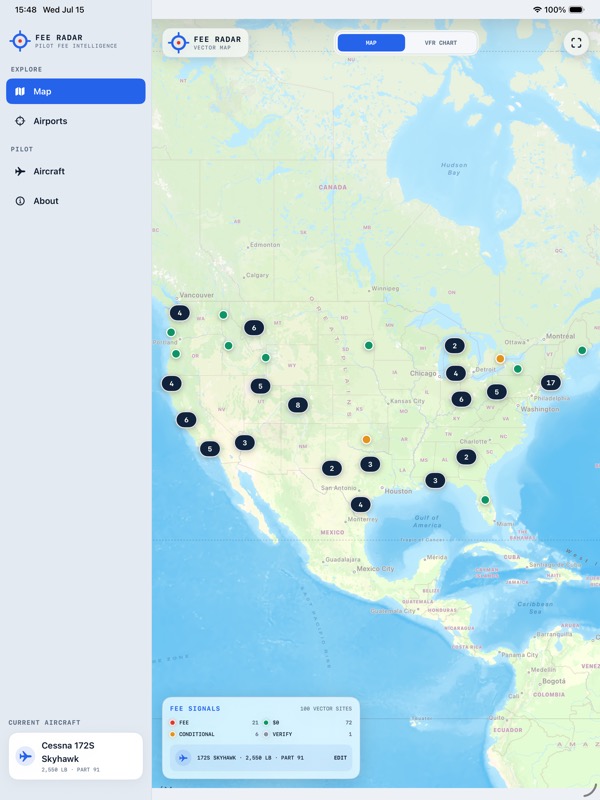
Scan airport pins on a pilot-friendly map and see identifiers appear as you zoom into the area you are planning.

02

Aircraft-aware estimates

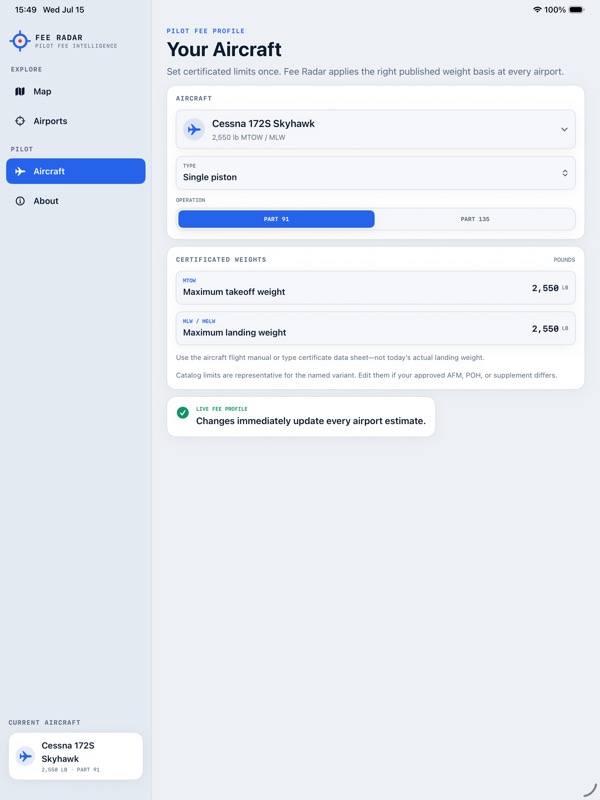
Select a piston single or twin and compare its weight with the airport's published fee schedule and exemptions.

03

Source-backed details

Review verification status and follow the original airport or operator source before making a final flight-planning decision.

See Fee Radar in action

Built for iPhone and iPad

The same airport intelligence adapts from a quick phone preflight check to an iPad-sized cockpit planning view.
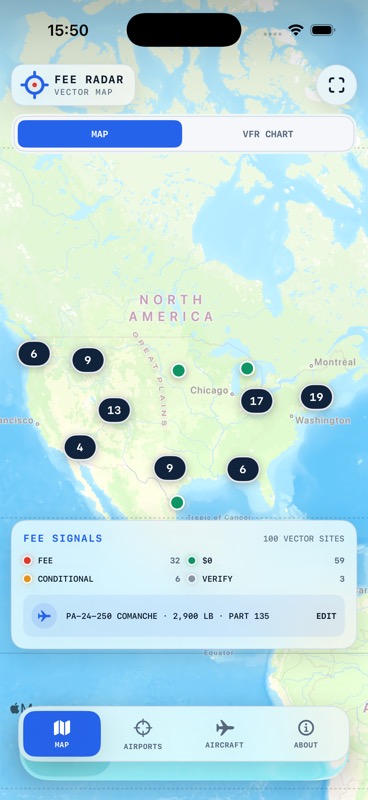
Fee Radar airport fee map on iPhone
Vector MapFee signals and aircraft-aware estimates at a glance.
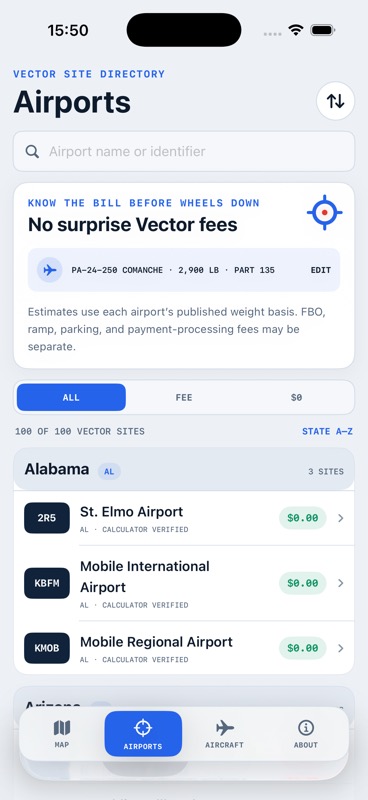
Fee Radar state-sorted airport directory on iPhone
Airports by stateReal state headers, fee status, and quick airport search.
Fee Radar airport fee map on iPad
iPad mapA roomier planning surface with the full fee legend and aircraft profile.
Fee Radar aircraft profile on iPad
Aircraft profileSelect the aircraft and operation so estimates use the appropriate certified weight.

Why this matters

Safety infrastructure should keep pilots' trust

As a private pilot, I value ADS-B for the safety mission it serves: shared awareness, traffic information, and a clearer picture of the airspace. Turning that safety signal into an opaque billing trigger creates a different relationship with the system.

  • Mission creep deserves scrutiny.A safety broadcast should not quietly become a commercial surveillance and billing mechanism without clear notice and accountability.
  • Fees should be knowable before arrival.Pilots should be able to find the actual schedule, exemptions, and weight basis during planning—not after an invoice appears.
  • Trust supports safety.Pilots should never feel pressure to limit participation in a safety system because they fear hidden commercial use of the data.
  • Transparency is not fee evasion.Fee Radar helps pilots make informed choices and pay lawful, disclosed charges; it does not interfere with billing systems or conceal flights.
Safety first, always. Fee Radar is a planning aid, not a navigation product. It should never influence a pilot to avoid a necessary landing, compromise fuel reserves, disregard weather, or choose an airport that is less safe for the operation. Airport policies change—confirm current information directly with the airport or FBO.